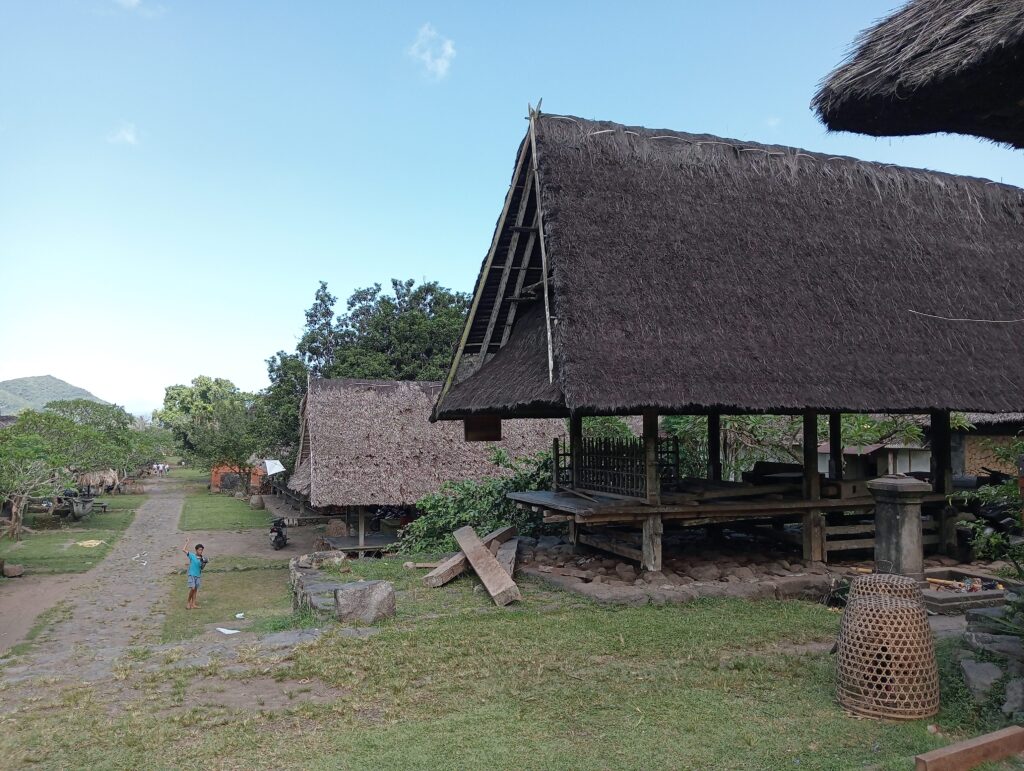



Traditional Balinese Houses and the Asta Kosala-Kosali Concept
Traditional Balinese houses are more than just living spaces—they are expressions of harmony and balance in life. Their design and layout are guided by an ancestral architectural text known as Asta Kosala-Kosali, a set of principles that regulates building proportions and spatial arrangements using the physical measurements of the homeowner—such as fingers, palms, and footsteps. This personal scale ensures that the house truly belongs to, and fits, the people who live in it.
In this concept, every structure within the compound has its own designated position and purpose. Key buildings such as the pelinggih (family shrine), the bale dangin (ceremonial pavilion), the bale dauh (living and guest pavilion), the kitchen, and the central courtyard are arranged according to the cardinal directions, the natural contours of the land, and the sacred hierarchy of space. Nothing is placed at random. The placement is always intentional, reflecting the flow of life and the balance between the spiritual and the practical.
These spatial arrangements are rooted in the philosophy of Tri Hita Karana, which emphasizes harmony in three essential relationships:
- Parahyangan – harmony between humans and God
- Pawongan – harmony among humans
- Palemahan – harmony between humans and the natural environment
For this reason, a traditional Balinese house is not only aesthetically pleasing—it also embodies deep cultural, social, and spiritual meaning. Every distance, every direction, and every open space carries significance. A home built under the Asta Kosala-Kosali principles becomes a living environment that nurtures unity with nature, respect for others, and a close connection with the divine.